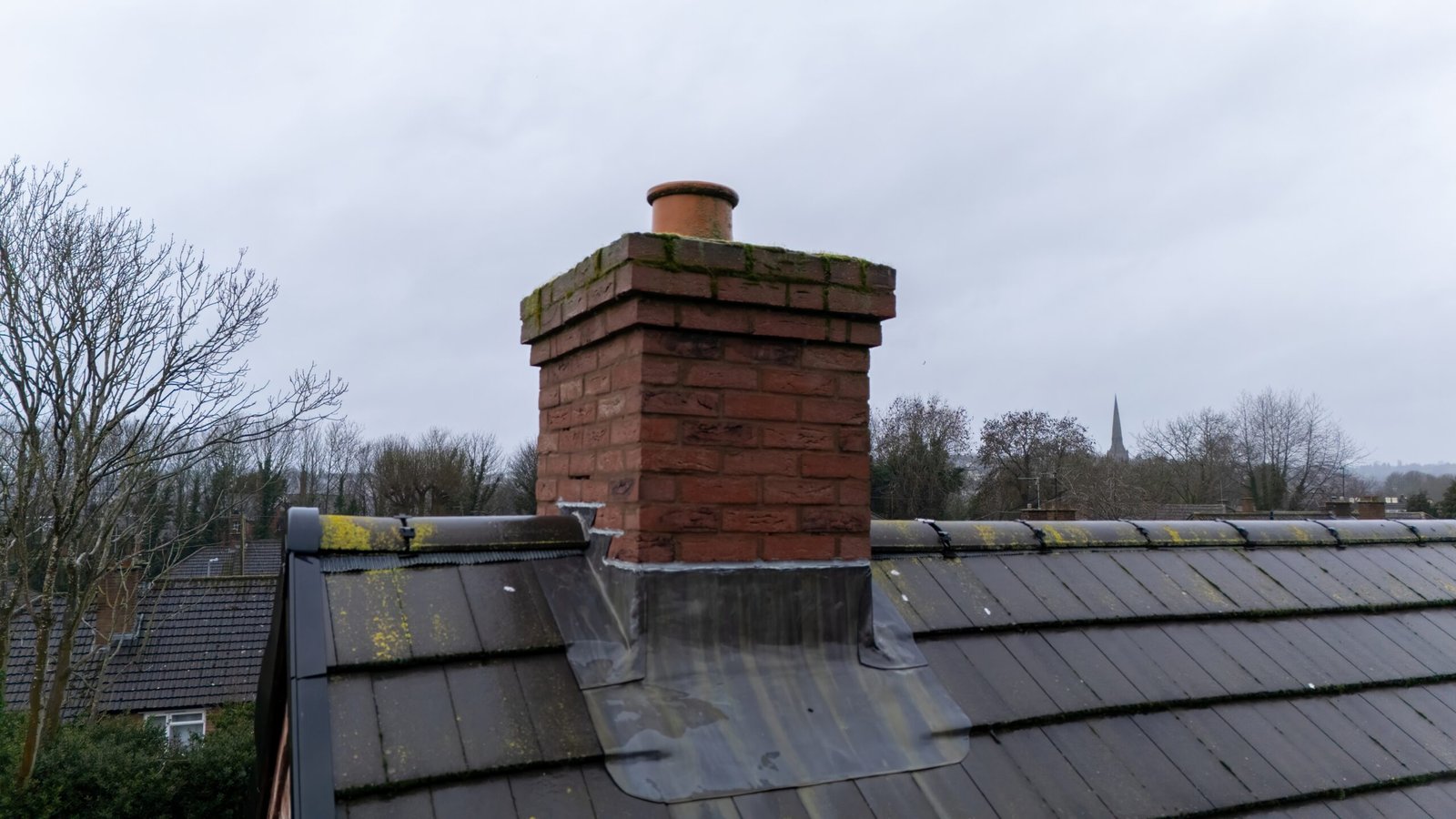
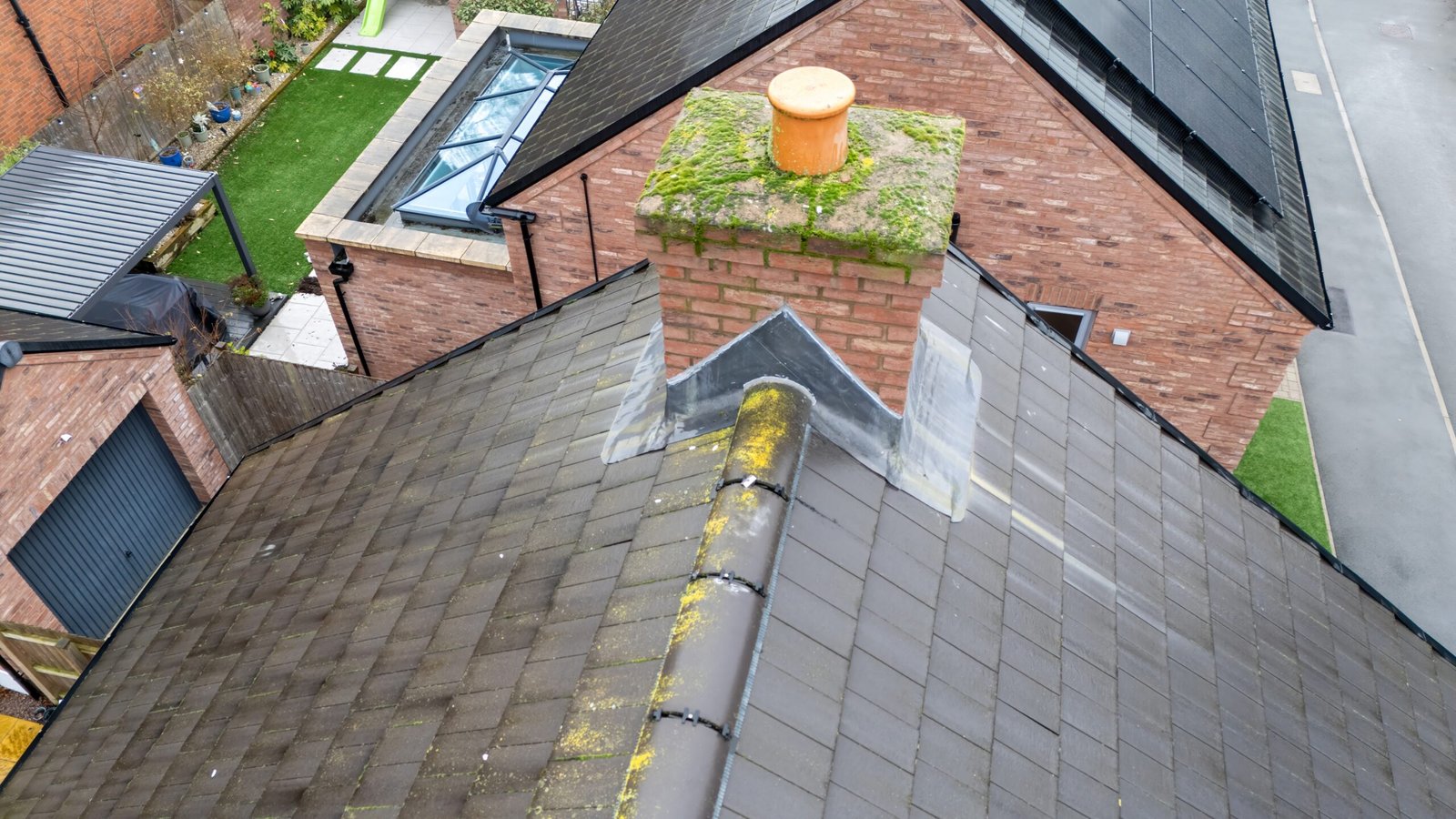
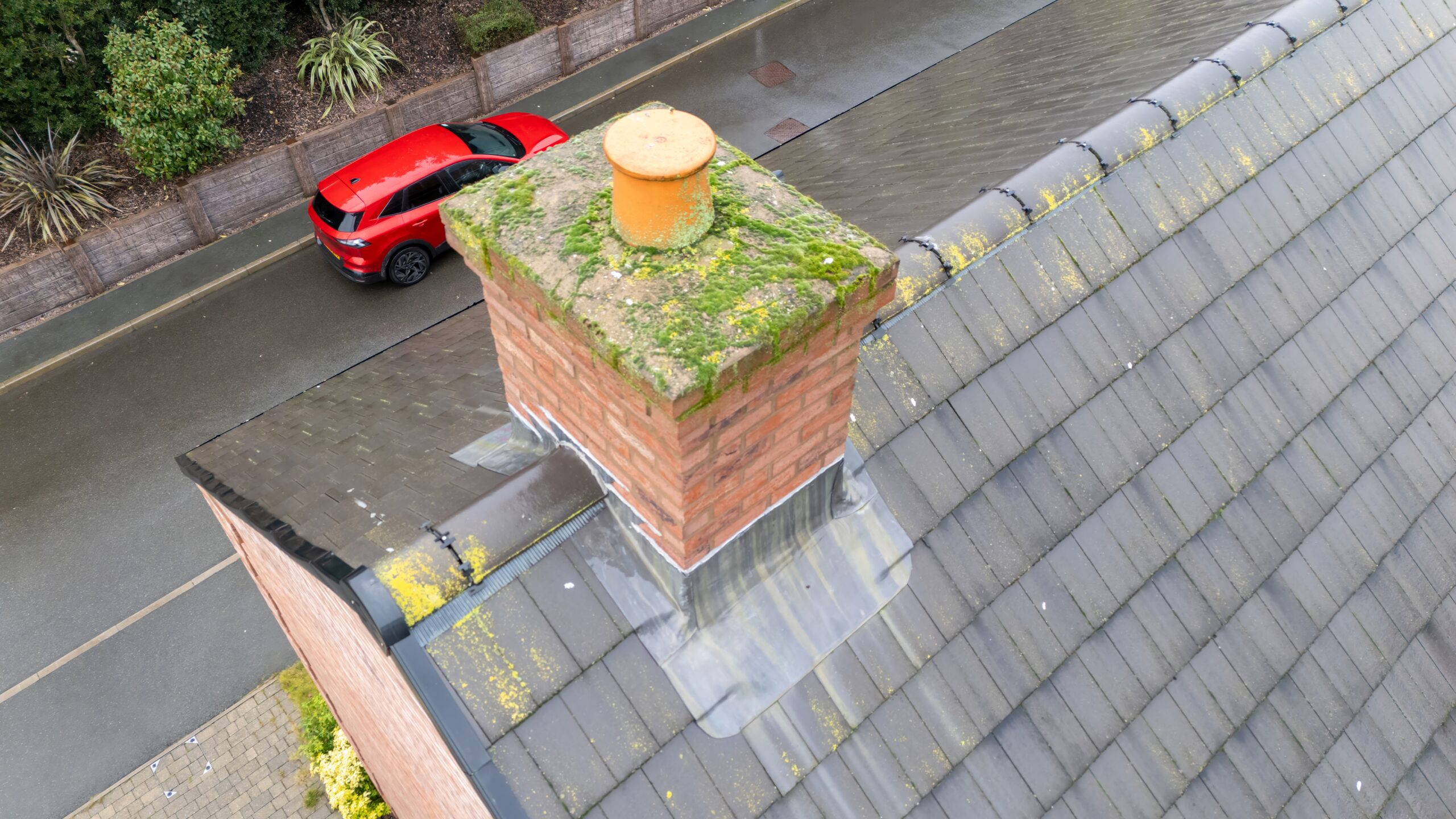
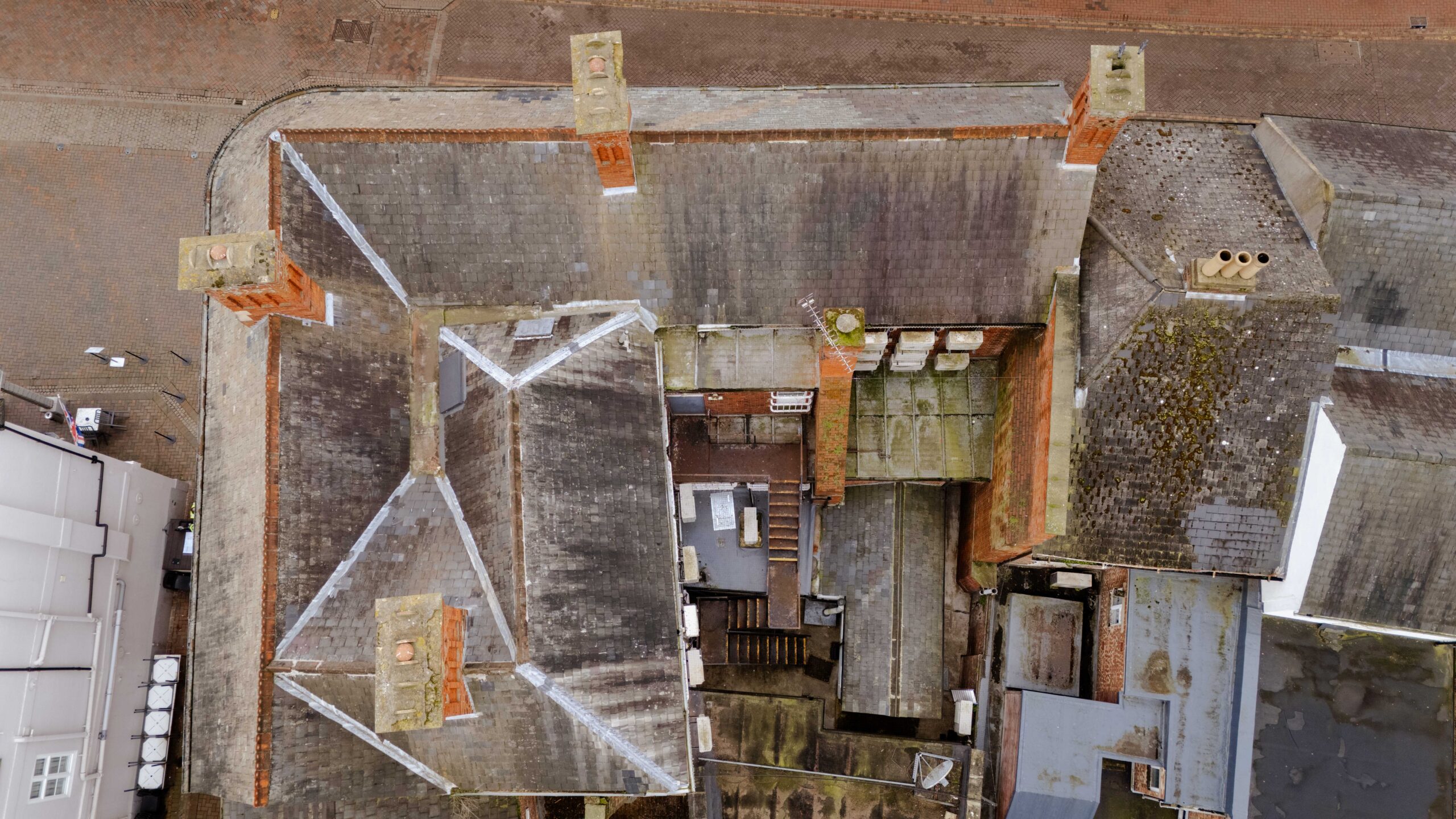
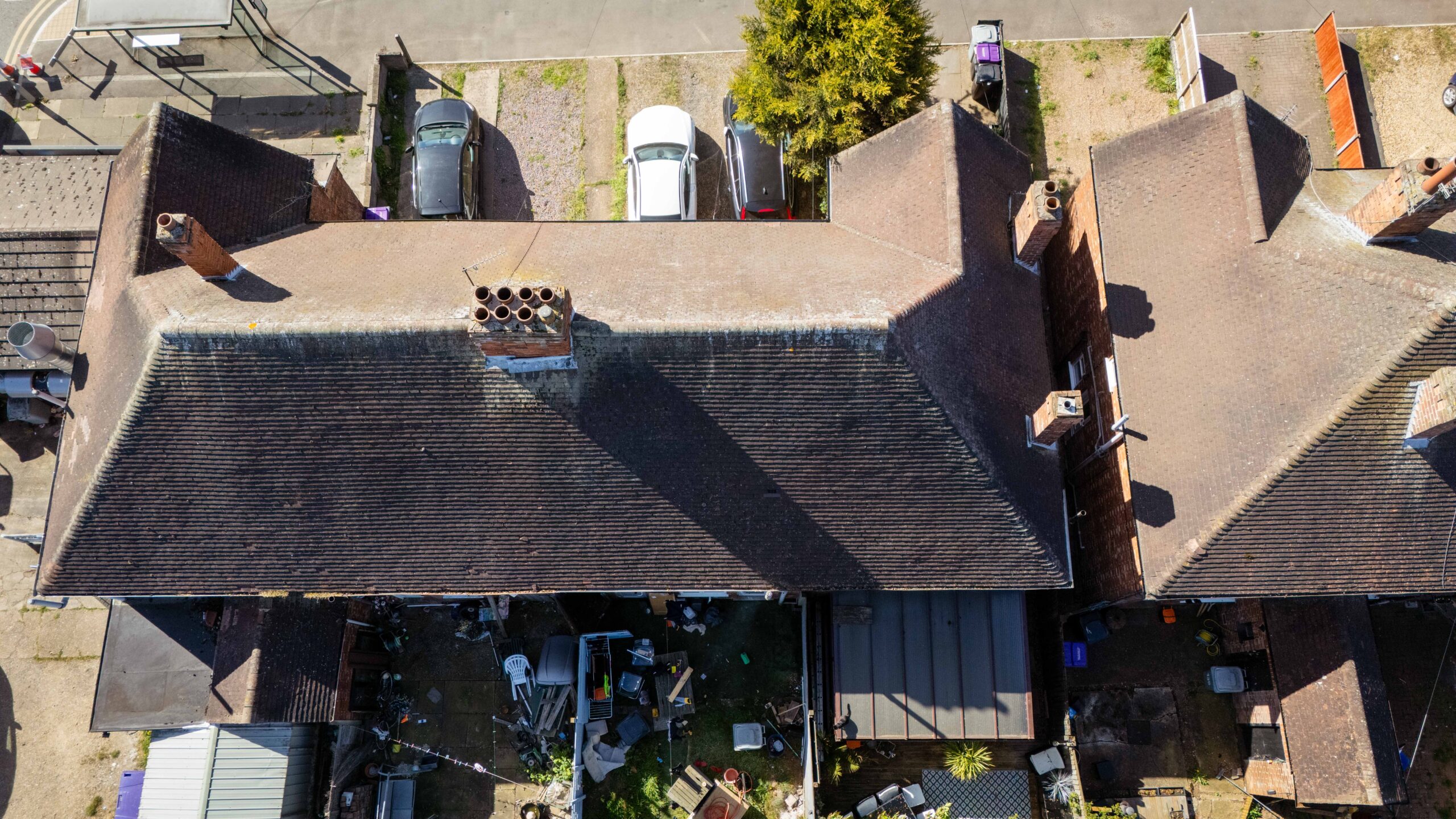
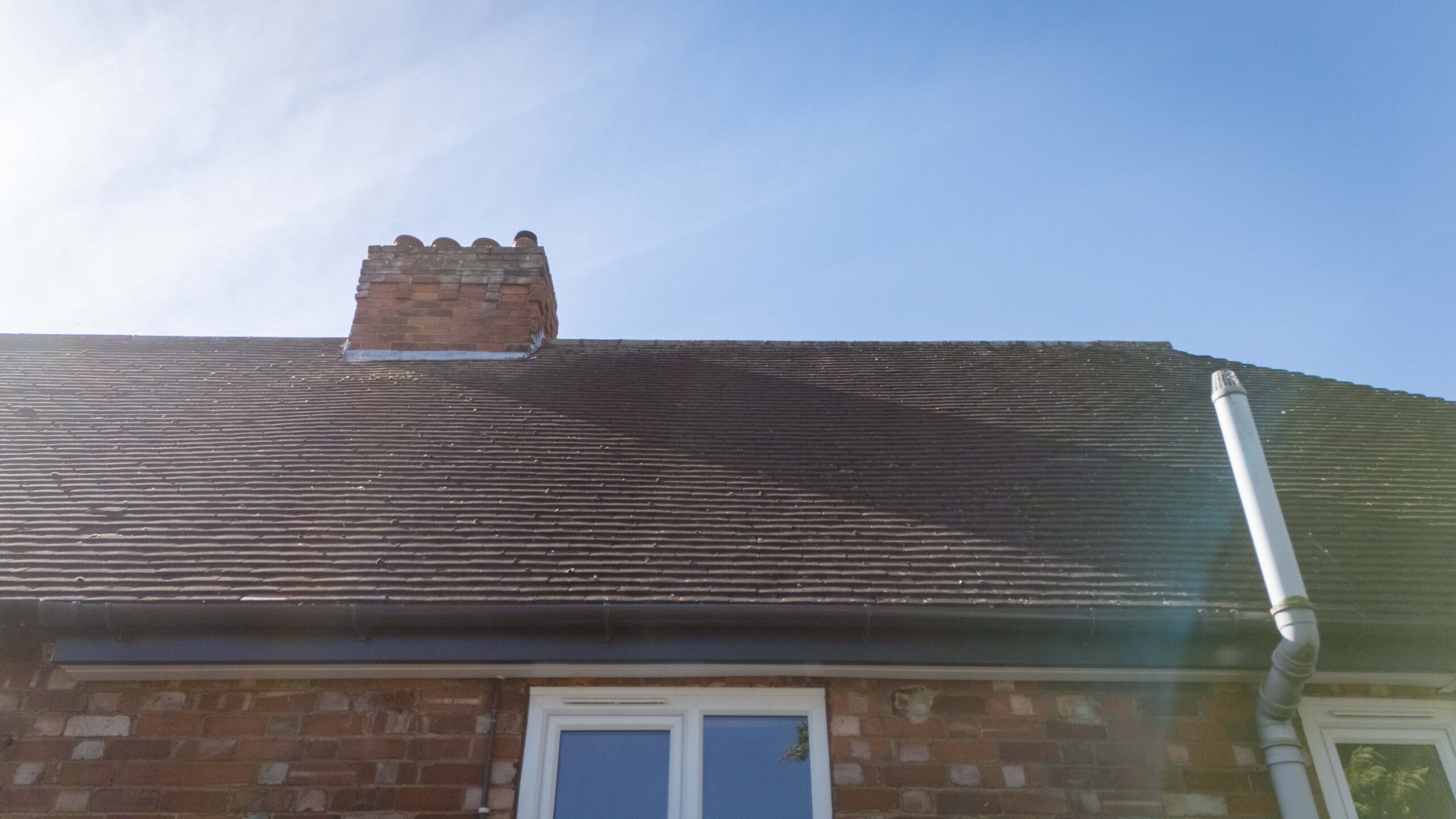
A single chimney stack rarely justifies scaffolding on its own. A drone survey gets close enough to check the same detail, without the cost or the wait.
CAA operational authorisation
£5m public liability insurance
Reports in 2–3 working days
No scaffolding required
Chimney stacks take the worst of the weather and are the hardest part of a roof to check properly from the ground.
Spalled brick faces and missing or crumbling mortar joints between courses.
Cracked or eroded mortar around the base of the pots, the most common failure point.
Damaged or missing chimney pots, cracked cowls, and blocked flue terminals.
Visible tilt or separation from the roofline that may indicate structural movement.
Lifted lead flashing where the stack meets the roof covering.
Visible staining on brickwork that points to water tracking down the inside of the stack.
STEP 1
A call or a form, building type, what’s prompted it, and roughly where you are.
STEP 2
Airspace, site access and any local restrictions are cleared before a date is booked in.
STEP 3
I carry out the survey on site, on a date that works for you.
STEP 4
High-resolution images and data delivered securely, with a written condition report if you’ve asked for one.
Before relighting a fire after a period of disuse, or when damp appears near the chimney breast.
Supporting evidence for a building survey without the cost of separate access equipment.
Routine condition checks on let properties with period chimney stacks.
A survey usually costs less than the access equipment alone would.